

📓Creativ Brief: The CPM Dilemma. What is the Value of an Impression?
AI return gap. Free Press $200 million acquisition. Murdoch succession battle ends. AI Agent consumer usage. Skydance bids for Warner Brothers Media.


An impression is the standard unit of measurement in advertising - a tally of the total number of eyes that a creative, video, print, interstitial, banner, billboard, experience, article has accumulated.
In the 1940s, the advertising industry created a standard to measure the value of a media placement called a CPM - cost per thousand impressions from French, coût pour mille impressions.
This means that if your CPM is $5, then the cost of delivering said creative to 10,000 pairs of eyes would be $50.
The problem with this unit of standard advertising measurement is that not every impression has the same value.
Brands and advertisers today race to the CPM bottom, seeking the cheapest CPMs driven by business demands, procurement departments, and antiquated mix media models that no longer accurately demonstrate how people consume media.
A digital banner ad, print ad, video interstitial, article interstitial, pre-roll, social ad, billboard, PR placement, product placement, sports sponsorship, in-game ad, and experiential activation are all calculated the same. Yet the distinct value of each of these marketing activations clearly carries various levels of value. Cheap digital ads served by black boxed DSPs make hardly any impression at all (roughly an $8 CPM), while an immersive sports or fandom sponsorship carves a lasting impression into a consumer's mind ($1000 CPM).
Yet, advertisers are graded on the cost efficiency of their blended CPM - an average CPM cost across an entire campaign. This forces brands to buy cheap, garbage impressions to dilute the overall cost of their impressions and reduce their blended CPM.
The great irony is marketers make their advertising more expensive by doing so. In 2021, Chase and P&G turned off all of their programmatic advertising, shutting down $200 million in digital banner ads. They saw no change in sales.
These ads were garbage, serving internet bots banners. They were cheap because they were ineffective. Don’t be fooled by a low CPM.
A cheaper CPM doesn’t make your advertising more efficient, it often makes it less effective.
3 Stories Shaping the Media and Tech Industries
Executives like Accenture’s Julie Sweet stress that the barrier isn’t the technology itself but entrenched leadership styles, outdated processes, and the difficulty of scaling AI across complex organizations, even as 85% of C-suites still plan to deepen their AI bets.
Why it matters: For media, tech, and advertising, this underscores that AI’s disruptive potential won’t be unlocked by hype alone but by structural change, making the winners those who can marry strategy and culture with the tools themselves.
The deal would fold Weiss’s influential outlet into Paramount’s broader media empire while positioning her directly inside CBS’s newsroom, marking a major career shift for the former New York Times columnist.
Why it matters: In the broader media and entertainment context, this represents a bold bet on personality-driven journalism to reshape legacy news brands and attract new audiences.
The deal also brings Rupert’s younger daughters into the trust, consolidating voting power and securing Lachlan’s leadership through at least 2050.
Why it matters: This consolidation cements the Murdoch empire’s conservative direction and ensures its influence on global media for decades.
Creativ Spotlight - Innovation as an Operating Model

An industry built on the promise of differentiation risks drifting into a sea of sameness, squeezed by automation, technology, and efficiencies. The paradox is clear: As creative agencies are becoming commodities, they are falling victim to the very market forces clients pay them to escape.
Read the latest byline from Michael McIntyre, CEO of MOCEAN, in Fast company.
Stat of the Week - One-Third of US Adults Use AI Agents for Brand Discovery at Least Regularly
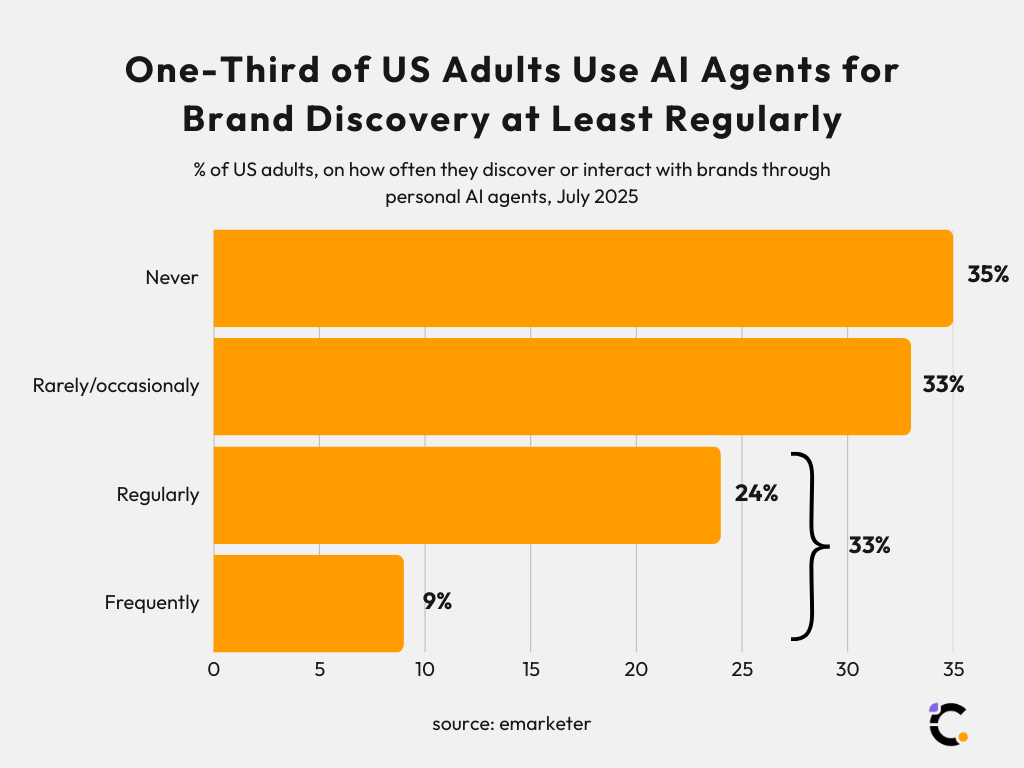
One-third of U.S. adults now use AI agents to discover or interact with brands at least on a regular basis.
While 35% say they never use AI for brand discovery and another 33% only rarely do, 24% report using them regularly and 9% frequently—underscoring a growing reliance on personal AI agents in consumer behavior.
AI-driven discovery is becoming a core channel that will define the future of brand marketing.
One Media Thing - Richest Man’s Son Bids on More Media
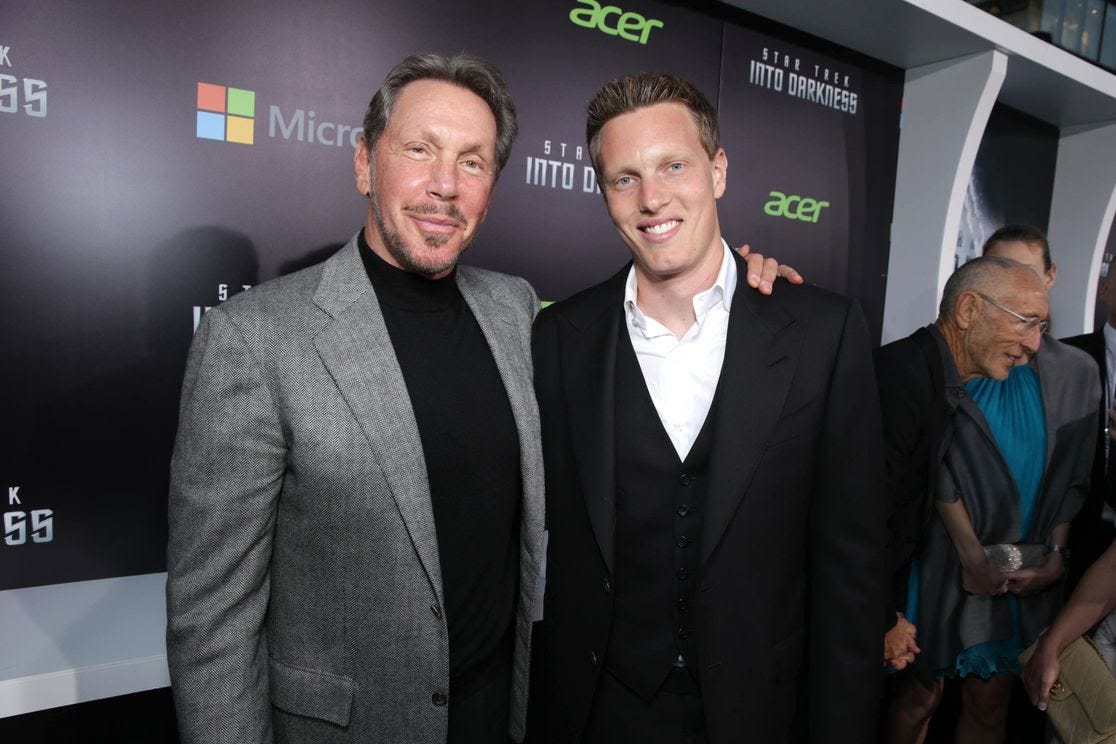
Oracle's Larry Ellison and his son David Ellison in 2013. Photo: Eric Charbonneau/Getty Images for The Hollywood Reporter
Oracle CEO Larry Ellison’s son, David Ellison, has been given the cash to buy himself to the top of Hollywood. David Ellison plans on more bids on distressed media assets that are struggling to survive in the streaming era in order to acquire his way to a mega entertainment company.
His firm Skydance has already finalized the acquisition of Paramount. Now he’s bidding on Warner Brothers Discovery, which has lost 50% of its value in the last few years.