


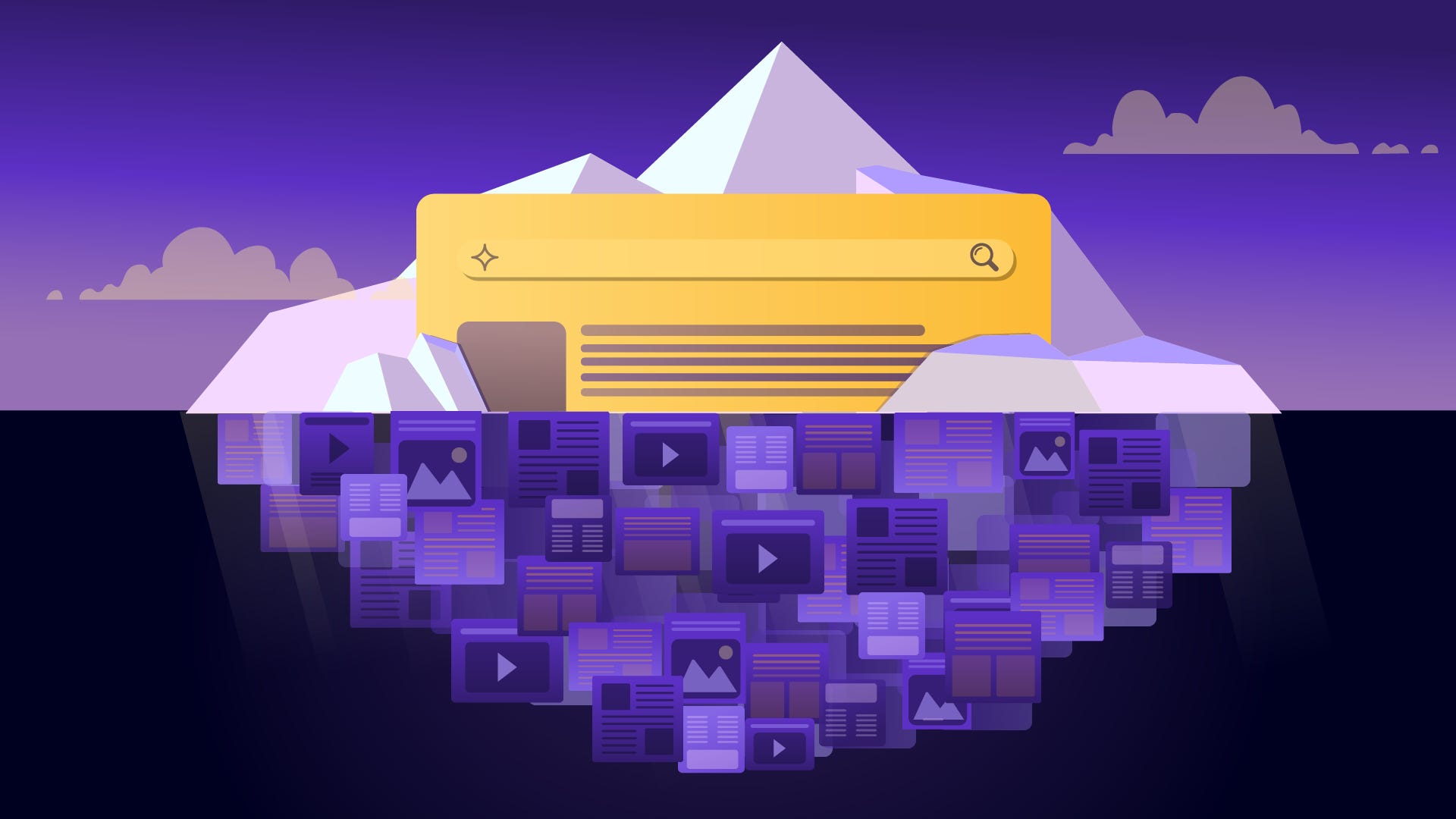
2026 will be the year that organic content/SEO strategies die.
This is because search engines no longer refer traffic, they summarize and display information using AI.
A news article from the WSJ describes organic traffic to publishers dropping by up to 50% in2026, due to Gemini AI recommendations pushing publisher and brand content below the fold. The new recommendations push the articles and videos that Gemini uses to create an AI summary far down the page and obscuring the sources behind buttons.
A 50% drop in digital traffic to publishers literally cuts ad revenue and conversions in half. Meanwhile, Google makes more ad revenue on sponsored results due to longer user dwell time on Gemini results.
Our gaming and media clients are seeing similar declines in organic search traffic.
How this works: Google’s bot crawlers both index the site for search results, but also scrape information to inform their Gemini AI summaries. Google continues to accumulate the vast majority of digital advertising revenue by gatekeeping traffic to the rest of the internet. Their ads get displayed first, have prominence on pages, and have better contextual relevance due to aggregating disparate data sources from users keyword searches. This makes Google the most effective lower funnel demand conversion options for advertisers.
However, with the advent of AI summaries, the Google information toll gate has further commodified journalism, branded content, and 3rd party information. No longer does Google just control search result rankings that one could gamify by posting relevant information. It now displays the entire summary and info aggregated from multiple 3rd party sources and displays ads alongside.
The only way to show up? Pay up.
Time for brands, publishers, and agencies to rethink their search strategies.
3 Stories Shaping Media, Gaming and Tech
In what Disney is calling a first-of-its-kind phygital experience, Smuggler’s Gambit officially launched August 16th, connecting Millennium Falcon: Smugglers Run at Disneyland and Walt Disney World directly to a brand new Star Wars island in Fortnite, allowing guests to begin a mission in the park and complete it inside the game or start the adventure on planet Ord Ryla in Fortnite and carry it with them into the ride. Built in-house by Disney Games and Digital Entertainment using Unreal Engine 5, the same engine powering both Fortnite and the ride’s visual systems, guests accept the mission via the Disneyland or My Disney Experience app while waiting in the queue, collect crates for Star Wars fan favorite Hondo Ohnaka aboard the Falcon, and unlock a Forsworn Trooper outfit that transfers directly into their Fortnite account upon completion. The experience was developed in collaboration with Lucasfilm and Walt Disney Imagineering, with the shared Unreal Engine 5 infrastructure making the physical-to-digital handoff technically seamless in a way that would have been nearly impossible just a few years ago.
Why it matters: What Disney and Epic have built here is not a brand collaboration, it is a proof of concept for the future of IP monetization. Every touchpoint in this experience benefits a different revenue stream simultaneously: park admission, in-app engagement, Fortnite playtime, skin ownership, merchandise, and franchise awareness for Star Wars and Fortnite together. The natural next frontier is obvious — a connected Disney+ account that recognizes your park and game history to personalize what you see on screen, or a ride that changes based on your in-game choices. For brands and agencies, Smuggler’s Gambit is the most sophisticated example yet of transmedia IP activation done at scale, and it sets a benchmark for what cross-platform brand experiences are now expected to achieve.
Rockstar Games premiered Grand Theft Auto VI: An Extended Look today exclusively on Netflix at 3pm ET, giving the world its first real look at 26 minutes of gameplay across Vice City and the surrounding state of Leonida, showing protagonists Jason and Lucia navigating a mission for nightclub owner Boobie Ike with a level of environmental detail, seamless cutscene transitions, and interactivity that set social media alight within minutes of the stream going live. The reveal confirmed players can switch between Jason and Lucia mid-mission, and that Red Dead Redemption 2’s beloved interact mechanic, including petting dogs for positive karma, returns in full. The game’s open world will include e-scooters, diving, rally racing, strip clubs, and small-scale heists alongside the franchise’s signature chaos. Rockstar gave Netflix a six-hour exclusive window before the footage went live on their official YouTube channel, treating the reveal as a full entertainment premiere rather than a traditional gaming trailer drop, a framing decision that says as much about where gaming sits in culture as anything in the footage itself.
Why it matters: Rockstar choosing Netflix over YouTube as the premiere destination for the most anticipated gaming reveal in history is a landmark moment in the convergence of gaming and entertainment media. The message to every studio, streamer, and brand in the industry is explicit: the line between a video game launch and a major entertainment event no longer exists. For agencies and marketing teams building campaigns around GTA 6’s November 19th release, the Netflix premiere is a preview of the scale and seriousness this launch will be treated with, and the window to attach meaningful brand partnerships to that cultural moment is already closing.
Nvidia reported another record-breaking quarter today with sales projected to jump 70% as AI infrastructure demand continues to accelerate, and the Wall Street Journal reported simultaneously that the company has agreed to acquire Hugging Face, the open-source AI model platform that serves as the GitHub of the AI industry, for nearly $13 billion. Hugging Face hosts the majority of the world’s publicly accessible AI models, datasets, and research, making it the central nervous system of open-source AI development and the platform most relied upon by independent developers, researchers, and startups building outside the walled gardens of OpenAI and Anthropic. The acquisition, if confirmed at this scale, would place the world’s most powerful AI chip company in direct control of the infrastructure layer where the open-source AI ecosystem depends on, a consolidation that analysts described as one of the most consequential AI business moves of the year.
Why it matters: Nvidia has spent years being the arms dealer of the AI race, selling infrastructure to every competing lab regardless of ideology or approach. Owning Hugging Face changes that calculus entirely, giving Nvidia a direct stake in the open-source AI ecosystem and meaningful influence over which models get the most visibility, resources, and development support. For brands and agencies building AI-powered tools and workflows, this is a reminder that the open and accessible AI landscape they are building on has owners, those owners have interests, and consolidation at this level shapes what options remain available and at what cost for years to come.
Stat of the Week: Everyone Knows Creative Matters. Almost Nobody Is Actually Managing It.
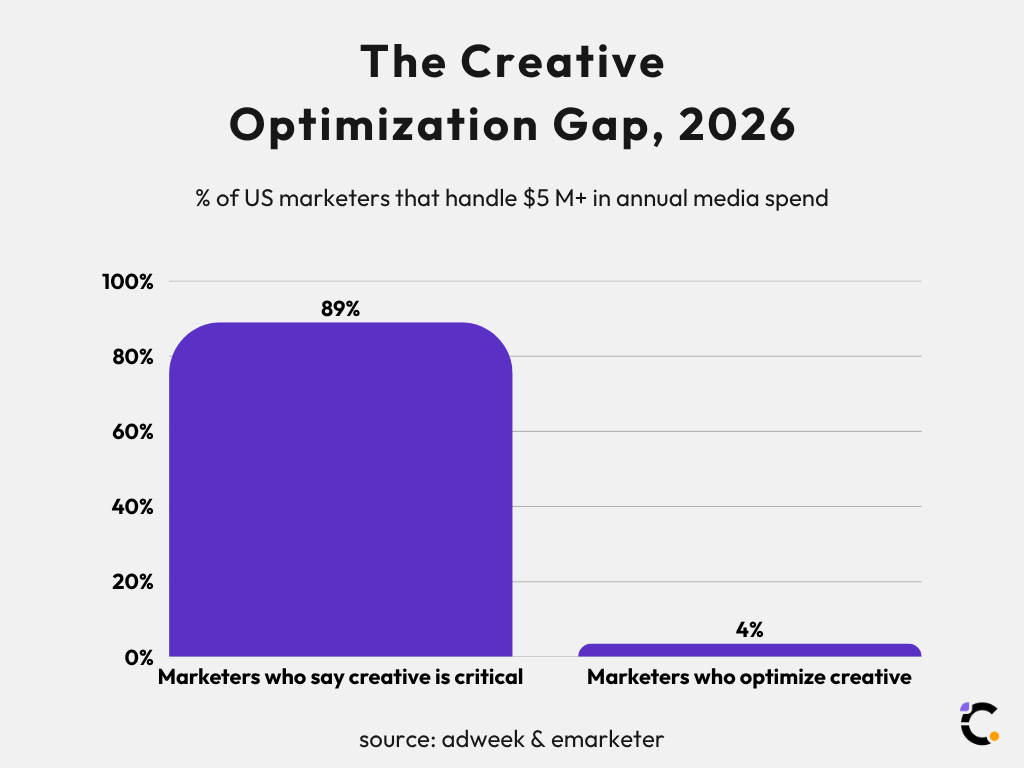
According to a joint survey of US agency and marketing professionals conducted by Perion and eMarketer, all managing $5 million or more in annual media spend, 89% of marketers say creative is critical to campaign performance. Yet only 3.6% say their creative is actively optimized. Nearly three-quarters of marketers do not touch their creative at all until they see a performance decline, treating one of the highest-impact levers in advertising as a reactive fix rather than a proactive discipline.
The gap between what marketers believe and what they actually do is the whole story here. Creative has long been confirmed as the single largest driver of advertising effectiveness, responsible for more performance variance than targeting, bidding strategy, or channel selection combined. And the industry largely agrees on that point. What this data exposes is that agreement has not translated into behavior. For agencies and brands, the 3.6% figure is not just a benchmark, it is a competitive opportunity sitting in plain sight. The clients whose agencies are actively testing, rotating, and optimizing creative rather than waiting for the numbers to break are operating in a fundamentally different league than the 96.4% who are not. In an era where AI can generate creative at scale and the barrier to production has collapsed, the scarce resource is no longer the asset itself. It is the strategic judgment to know which asset is working, which is wearing out, and what to do about it before the campaign tells you it is already too late.
One Tribute — Dolly Parton (1946–2026): Music Icon, Marketing Pioneer
Dolly Parton passed away on August 25th in Nashville after a brief battle with cancer. She was 80 years old, and while her music will rightly be remembered forever, The Creativ Brief wants to honor something the entertainment world does not discuss enough about her: she was one of the most instinctively brilliant brand builders and marketers of the twentieth and twenty-first century, full stop.
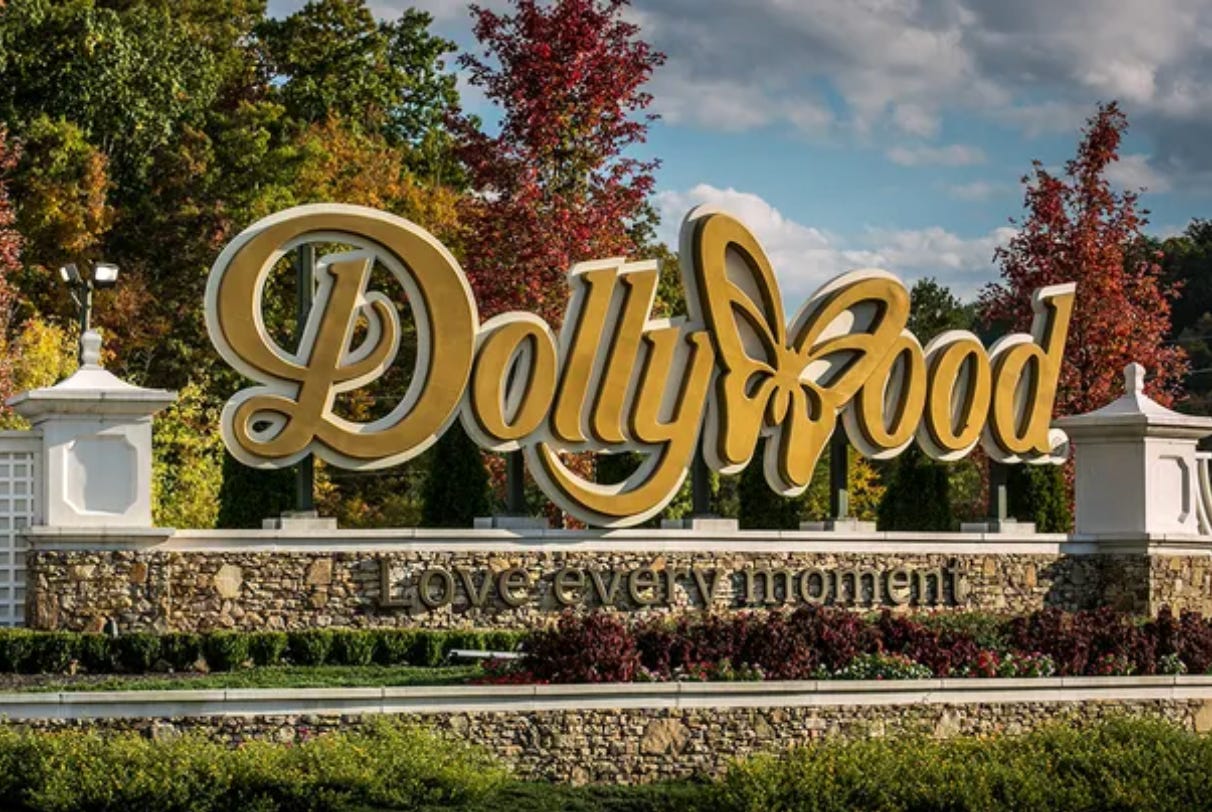
She built Dollywood in 1986 in Pigeon Forge, Tennessee, transforming her home region from a tourism afterthought into one of America’s most beloved theme parks. This was not by chasing trends but by centering the experience entirely on her own authentic identity and Appalachian heritage. It draws more than three million visitors annually and has generated billions in economic impact for a community that needed it. She partnered with Duncan Hines to put her name on baked goods, not as a vanity deal but as an extension of her genuine love of Southern home cooking and her belief that joy should be accessible to everyone. She was in active development of branded truck stops designed to rival Buc-ee’s, built around Southern hospitality and her personal values, and she had enough business sense to know that convenience retail anchored in an authentic brand story is one of the most durable businesses you can build. She co-starred in 9 to 5 in 1980, a film that became a cultural anthem for working women, wrote the title track herself, and turned the project into a Broadway musical decades later — a full transmedia IP arc before anyone was calling it that. She appeared on Hannah Montana and introduced herself to an entirely new generation of fans at the exact moment that audience was forming their cultural identity. She donated $1 million to Vanderbilt University Medical Center, money that helped fund the early research that became the Moderna COVID-19 vaccine. And her Imagination Library has gifted more than 300 million books to children in low-income communities worldwide, which is a philanthropic program so well designed that multiple governments have adopted it as official early literacy policy.
She wrote both Jolene and I Will Always Love You on the same day in 1973. Whitney Houston’s cover of the latter became one of the best-selling singles in history, and Dolly reportedly receives two dollars in royalties every time it is played. She was offered the Presidential Medal of Freedom and declined it twice because she said she did not feel she had earned the right to be put on a pedestal. She was a fierce and quiet advocate for LGBTQ+ rights decades before it was commercially safe to be so, saying simply that she loved everybody and meant it. She trademarked her name, her likeness, and her brand image early and protected them fiercely while remaining one of the most genuinely warm and accessible public figures in American life. She was not just a country singer. She was a brand architect, a philanthropist, a businesswoman, a storyteller, and a marketer of the highest order — and The Creativ Brief is proud to say so.